What Is Pitru Dosha? Signs in the Birth Chart & Traditional Remedies
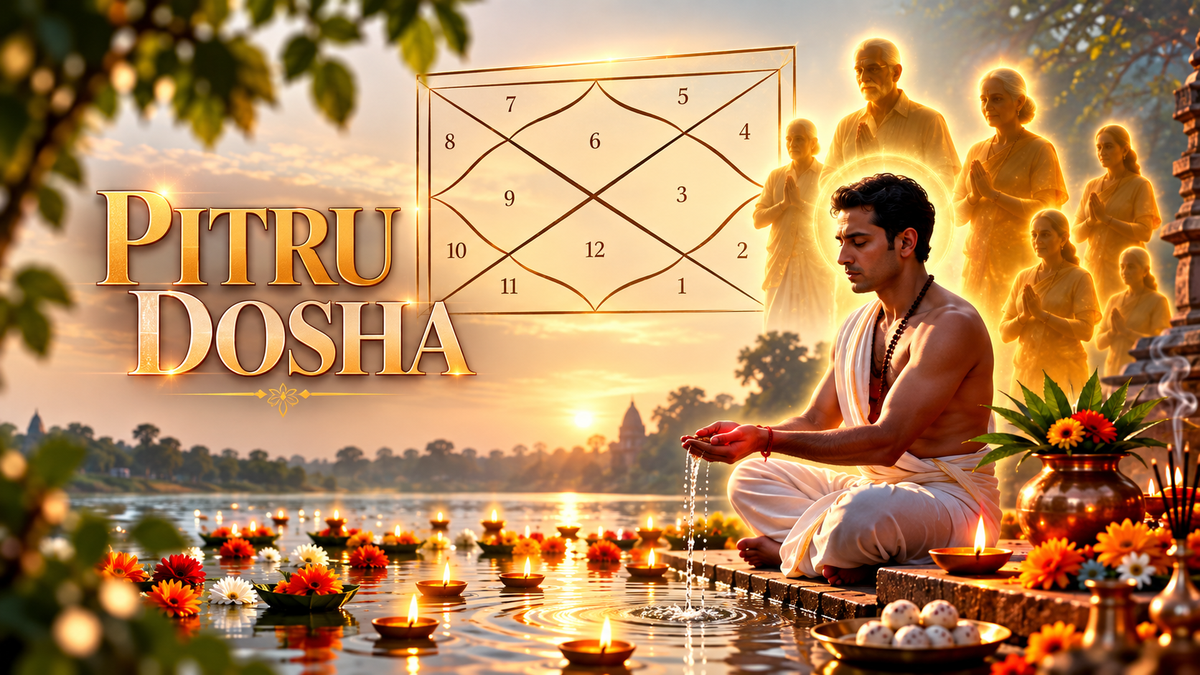
What Is Pitru Dosha?
Pitru means ancestors, and dosha means an imbalance or affliction. Pitru Dosha is understood as an ancestral debt or unresolved karmic pattern carried within a family line.
In Vedic thought, we inherit not only our ancestors' strengths but also their unfinished business: rites left undone, wrongs left unrepaired, or blessings left unclaimed.
It is important to understand that Pitru Dosha is not a curse from ancestors. It is better understood as a pattern that asks for acknowledgement, gratitude and conscious correction.
How Is Pitru Dosha Identified in a Kundali?
Astrologers look at several factors together. No single placement confirms Pitru Dosha on its own; the full chart must be read in context.
Sun and Rahu
The Sun and Rahu together, especially in the ninth house, are traditionally examined. The Sun signifies the father and lineage, while Rahu is said to eclipse it.
Affliction to the Ninth House
The ninth house is associated with ancestors, dharma and fortune. Traditional astrology examines whether Rahu, Ketu or Saturn afflict this house.
Sun or Moon With Ketu or Saturn
The Sun or Moon conjunct Ketu or Saturn in certain houses may also be considered while assessing ancestral indications.
Ninth House Lord
The placement and condition of the ninth house lord are also examined, particularly when it is placed in a difficult house or is heavily afflicted.
Because these combinations can occur in many birth charts, a skilled astrologer weighs them against the strength of the chart as a whole. Having one of these placements does not automatically mean that a person has Pitru Dosha.
Signs Traditionally Associated With Pitru Dosha
Tradition links Pitru Dosha with recurring patterns in a family rather than with individual hardships. These are commonly described signs, not diagnoses.
Some traditionally associated patterns include:
- Repeated delays in marriage for several members of the family.
- Difficulty conceiving or concerns around children across generations.
- Ongoing discord within the family without a clear reason.
- Career or financial progress that repeatedly seems to stall despite effort.
- Dreams of ancestors appearing unhappy or asking for something.
If some of these feel familiar, please do not assume the worst. Life brings difficulties to every family. A proper birth-chart reading is needed to understand what your kundali actually indicates.
Traditional Remedies for Pitru Dosha
Traditional remedies focus on remembrance, gratitude, charity and spiritual practices. Pitru Paksha is considered an important period for performing ancestral rituals.
Shradh and Tarpan
Performing Shradh on an ancestor's tithi and offering Tarpan with water, black sesame and kusha grass is considered a foundational traditional remedy.
Feeding and Charity
Feeding cows, crows, dogs and people in need, along with donating food, clothes or grains in an ancestor's name, is traditionally believed to support peace and remembrance within the family.
Peepal Tree Worship
Offering water with black sesame to a Peepal tree on Saturdays or Amavasya and lighting a diya beneath it is a widely followed traditional practice.
Mantra and Recitation
Chanting the Pitru Gayatri Mantra, reciting the Pitru Suktam, or reading the Garuda Purana during Pitru Paksha is traditionally recommended in some traditions.
Narayan Bali and Tripindi Shradh
For stronger traditional indications, some astrologers may suggest rituals such as Narayan Bali or Tripindi Shradh. These are performed at sacred places such as Trimbakeshwar or Gaya under the guidance of a qualified priest.
Rudraksh
In Vedic tradition, Rudraksh is associated with Lord Shiva and is traditionally believed to support steadiness and inner calm.
Some astrologers recommend specific mukhis based on an individual's birth chart. It is better to choose a mukhi based on a personal reading rather than following a general rule.
A Gentle Reminder
Remedies work best when done with a clear heart rather than out of fear.
Remembering your ancestors with love, living by good values and serving others is, in many ways, the truest remedy of all.
Frequently Asked Questions About Pitru Dosha
How Do I Know If I Have Pitru Dosha?
Only a full reading of your birth chart can indicate this. Placements such as a Sun-Rahu conjunction or afflictions to the ninth house are traditionally examined, but they must be interpreted in the context of the whole chart.
Can Pitru Dosha Be Removed Completely?
Traditional astrology holds that sincere remedies such as Shradh, Tarpan, charity and prayer can help pacify the dosha over time. Astrology offers guidance, not guarantees.
What Is the Best Time to Perform Pitru Dosha Remedies?
Pitru Paksha is traditionally considered an important period for ancestral remedies, especially Sarva Pitru Amavasya. Amavasya is also considered suitable for ancestral remembrance and rituals in many traditions.
Is Pitru Dosha the Same as Kaal Sarp Dosha?
No. They are considered different astrological concepts.
Kaal Sarp Dosha traditionally relates to the placement of planets between Rahu and Ketu, while Pitru Dosha relates to ancestral indications, particularly those involving the Sun, ninth house and related factors.
Does Everyone in a Family Share the Same Pitru Dosha?
Not necessarily. Each person's birth chart is unique, and astrological indications can differ even between siblings.