Karwa Chauth 2026: Date, Rituals & Relationship Compatibility in Vedic Astrology
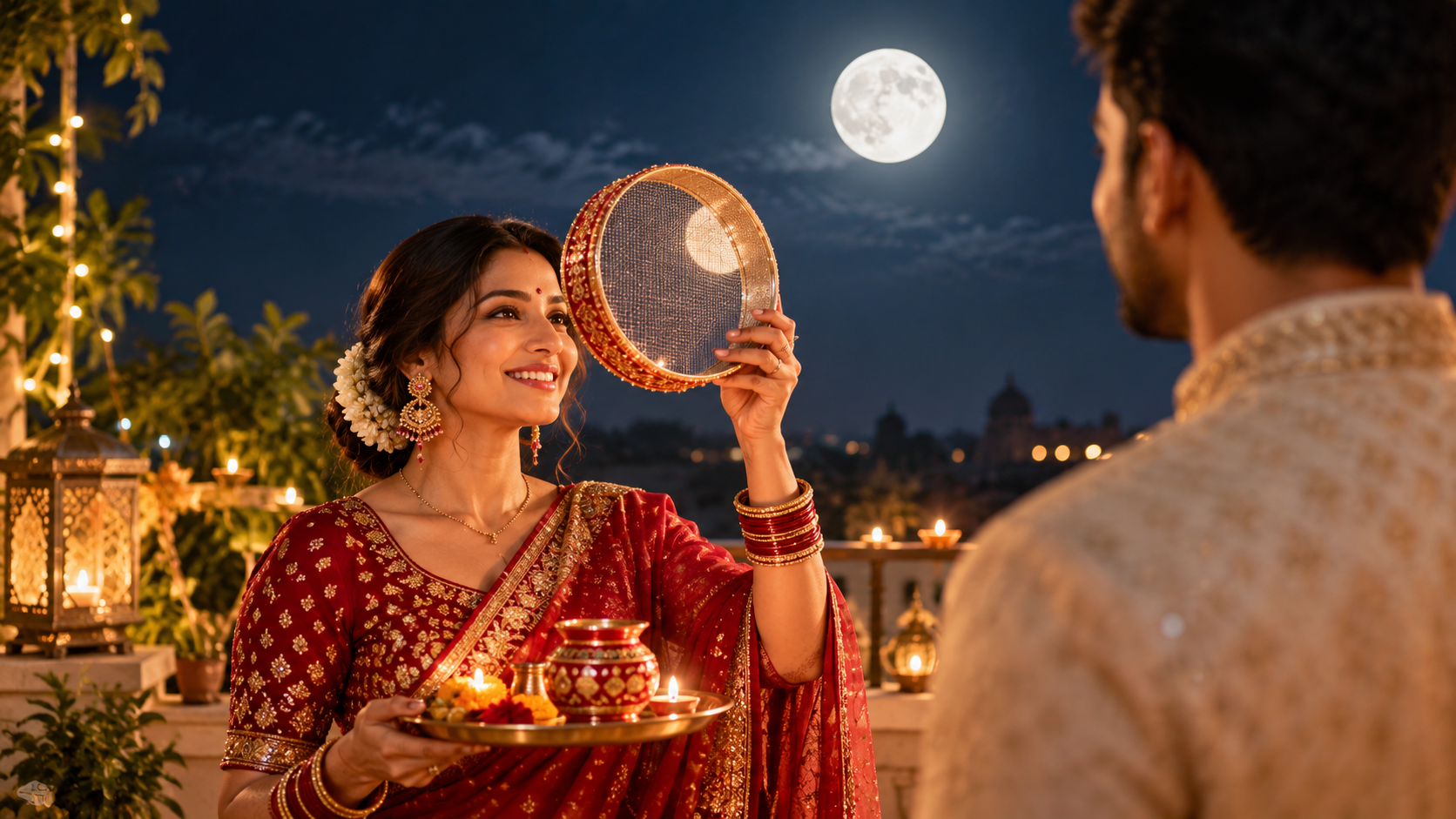
Karwa Chauth 2026 Date
Karwa Chauth falls on Thursday, 29 October 2026, on the Chaturthi of the Krishna Paksha of Kartik. Moonrise times vary from city to city, so check a reliable local panchang for the exact time in your area.
The Meaning of Karwa Chauth
Karwa refers to the earthen pot used in the ritual, and chauth means fourth, referring to the fourth day after the full moon. The day is observed mainly in North India, where married women fast from sunrise until the moon rises, praying for the wellbeing and long life of their husbands.
Over time, the tradition has grown. Many couples now fast together, and many unmarried women observe it for a future partner. At its heart, Karwa Chauth is about commitment, shared blessings and the choice to prioritise a relationship.
The Stories Behind the Fast
The most popular legend is of Queen Veeravati, who broke her fast early after her brothers tricked her with a false moon. Her husband fell gravely ill, and through her devotion and a full year of observance, she was able to restore his health. Another story tells of Karva, whose devotion is said to have saved her husband from a crocodile. Both stories celebrate courage, faith and loyalty.
Karwa Chauth Rituals
Sargi
Before sunrise, the mother-in-law traditionally gives her daughter-in-law sargi: a thoughtful meal of fruits, dry fruits, sweets and sometimes pheni or mathri. It is meant to sustain her through the day and symbolises family blessings.
The Fast
The fast is traditionally nirjala, without food or water, from sunrise until moonrise. Many women today choose a fast that suits their health. Tradition values the intention behind the fast more than its hardship.
Evening Puja
In the evening, women gather in groups, dressed in red and bridal colours, to perform the puja and listen to the Karwa Chauth katha. The karwa is filled with water, and thalis are passed around the circle.
Moonrise
When the moon rises, women offer arghya to the Moon, look at the moon and then their husband through a sieve, and break their fast with water and a sweet offered by their spouse.
Relationships in Vedic Astrology
Karwa Chauth is a lovely moment to reflect on your relationship and its deeper patterns. In Vedic astrology, several factors describe partnership:
- The seventh house represents marriage, partnership and the spouse.
- Venus (Shukra) represents love, harmony and attraction.
- Jupiter (Guru) is especially important for a woman's chart in traditional readings of marriage.
- The Moon reflects emotional compatibility and how two people feel together day to day.
- The Navamsa (D9) chart is studied closely for the deeper, long-term quality of marriage.
Compatibility Beyond Guna Milan
Before marriage, kundali matching is used to assess compatibility through the Ashtakoota system of 36 gunas. But compatibility is not only something to check before a wedding. A relationship reading for a married couple can help you understand each other's emotional needs, communication styles and the phases (dashas) you are both moving through.
Keeping the Spirit of Karwa Chauth All Year
- Make time each week for an unhurried conversation.
- Express gratitude for small things.
- Support each other's health and rest.
- Pray, meditate or simply sit together in silence once in a while.
Frequently Asked Questions
When is Karwa Chauth in 2026?
Karwa Chauth 2026 falls on Thursday, 29 October 2026.
What is sargi?
Sargi is the pre-dawn meal given by a mother-in-law to her daughter-in-law, meant to sustain her through the fast and carrying the family's blessings.
Can unmarried women observe Karwa Chauth?
Yes. Many unmarried women observe the fast, often praying for a good life partner.
Why is a sieve used on Karwa Chauth?
The sieve is used to view the moon and then the husband. In tradition, it is a gentle way of seeking the Moon's blessings before looking at one's partner.
Which house in the kundali represents marriage?
The seventh house represents marriage and partnership, supported by Venus, Jupiter and the Navamsa (D9) chart.