Chhath Puja 2026: Dates, Significance, Rituals and Spiritual Meaning
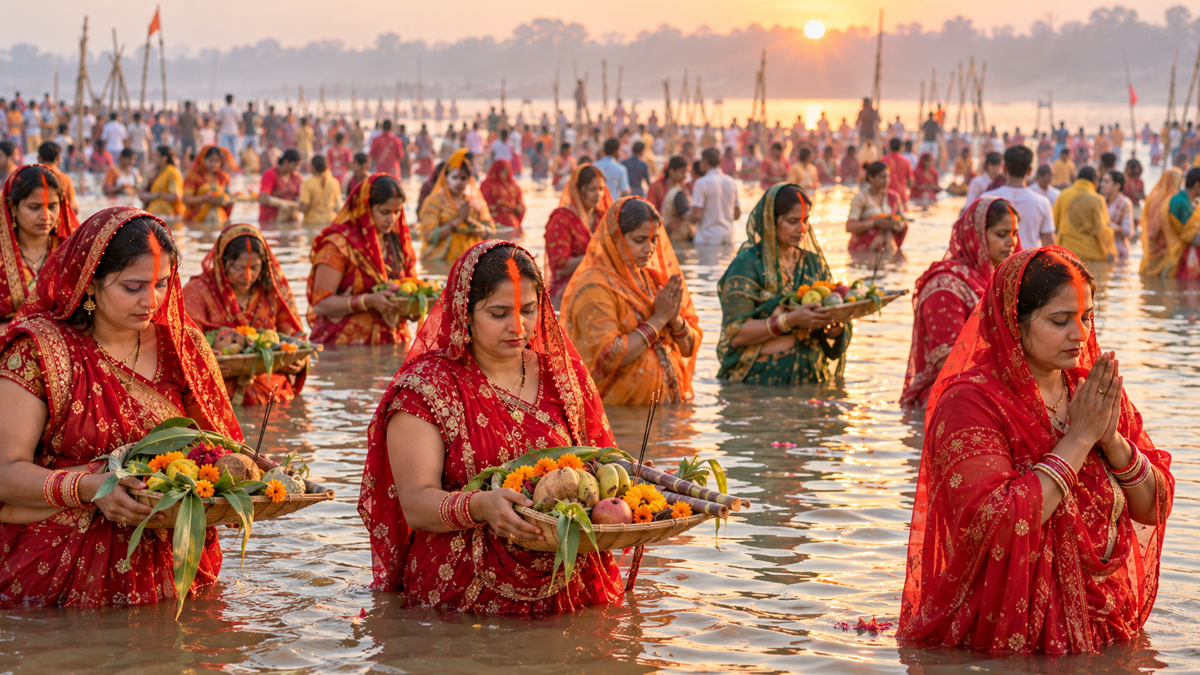
Chhath Puja is not simply a festival of offering prayers to the Sun. It is a profound expression of gratitude towards life, nature and the forces that sustain us every day. Celebrated mainly in Bihar, Jharkhand, eastern Uttar Pradesh and parts of Nepal, this ancient festival brings devotees to the banks of rivers, ponds and other water bodies to worship Surya Dev and Chhathi Maiya.
What makes Chhath Puja unique is that its rituals do not focus only on receiving blessings. They remind us to acknowledge what we already receive from nature: light, water, food, energy and life itself.
The festival is observed over four days through ritual bathing, the preparation of traditional food, fasting and offerings to the setting and rising Sun. Each stage carries a deeper meaning, teaching gratitude, discipline, patience and respect for the natural world.
In this guide, we cover the Chhath Puja 2026 dates, the significance of its four-day observance, the rituals of Sandhya Arghya and Usha Arghya, and simple ways to understand and observe this sacred festival.
Chhath Puja 2026 Dates
Chhath Puja 2026 begins on Friday, 13 November, with Nahay Khay and concludes on Monday, 16 November, with Usha Arghya. The festival follows a four-day sequence, with each day carrying a distinct ritual and spiritual significance.
- Nahay Khay: Friday, 13 November 2026
- Kharna: Saturday, 14 November 2026
- Sandhya Arghya: Sunday, 15 November 2026
- Usha Arghya: Monday, 16 November 2026
The main evening offering, Sandhya Arghya, takes place on 15 November, when devotees offer prayers to the setting Sun. The following morning, Usha Arghya is offered to the rising Sun, completing the principal observances of Chhath Puja.
Chhath Puja 2026 Tithi and Timings
The Shashthi Tithi begins at approximately 11:24 PM on 14 November and ends at approximately 2:01 AM on 16 November 2026, in Indian Standard Time.
Sunset and sunrise timings vary by location. For reference:
- Patna: Sunset on 15 November is approximately 5:01 PM; sunrise on 16 November is approximately 6:07 AM.
- New Delhi: Sunset on 15 November is approximately 5:28 PM; sunrise on 16 November is approximately 6:44 AM.
These timings are approximate. Check a reliable local panchang for your city before planning the offerings, as local sunrise, sunset and ritual timings may vary.
What Is Chhath Puja?
Chhath Puja is an ancient Hindu festival dedicated primarily to Surya Dev, the Sun God, and Chhathi Maiya, a revered maternal deity associated with the protection and well-being of children and families.
The Sun is worshipped as the source of light, warmth, energy and life. Chhath Puja expresses gratitude for this life-giving force through disciplined observances and offerings made in the presence of water.
Unlike festivals that centre on elaborate decorations or temple ceremonies, Chhath is marked by simplicity, purity and devotion. Devotees prepare traditional offerings, observe strict fasting according to their vows, and gather at rivers, ponds and other water bodies to offer Arghya to the setting and rising Sun.
The festival also places great importance on cleanliness, self-restraint and the purity of food and surroundings. For many families, its traditions are passed down through generations, making Chhath both a religious observance and a deeply rooted cultural experience.
Why Chhath Puja Matters Today
Modern life often encourages us to focus on what we want next: greater success, financial stability, better relationships and new opportunities. Chhath Puja invites us to pause and recognise what is already sustaining us.
The festival reminds us that gratitude should come before expectation. The Sun rises and sets every day, yet its importance can easily be overlooked because it is so constant. Similarly, the people, resources and opportunities that support our lives may become invisible when we focus only on what is missing.
Chhath also teaches the importance of discipline. Its preparations require patience, cleanliness, restraint and commitment. These qualities remain relevant even outside religious practice.
Even if you do not observe every ritual, the values behind Chhath Puja can be brought into everyday life through gratitude, conscious living and acts of service.
The Spiritual Significance of Chhath Puja
Why Do We Worship the Setting Sun?
One of the most distinctive traditions of Chhath Puja is offering Arghya to the setting Sun.
In many religious observances, prayers focus on new beginnings, future opportunities and blessings yet to come. Chhath also asks devotees to acknowledge what has already passed. The setting Sun represents the completion of a day. It reminds us that endings deserve respect just as beginnings do. A completed phase may have brought happiness, difficulties, lessons or unexpected changes, but each experience becomes part of our journey.
The next morning, devotees offer Arghya to the rising Sun, welcoming a new day with renewed devotion. This creates a powerful spiritual cycle:
Accept the ending → remain patient through the darkness → welcome a new beginning.
The deeper lesson is that not every ending is a failure. Sometimes, a phase must conclude before another can begin.
Why Is Water So Important in Chhath Puja?
Devotees traditionally stand in water while offering Arghya to the Sun. Rivers and ponds become sacred spaces where nature and devotion meet.
Water represents life, cleansing and humility, while the Sun represents energy and the light that sustains living beings. Together, they remind us of the natural balance on which life depends.
Chhath Puja therefore carries a responsibility beyond worship. If we honour rivers and water bodies as sacred, we must also work to keep them clean and protect them from pollution.
Nature is not merely something we use; it is something we should honour and protect.
Why Is Chhath Puja Known for Its Discipline?
Chhath Puja is traditionally observed with strict cleanliness, fasting, simple food, restraint and devotion. The preparations themselves become part of the spiritual practice.
Devotees carefully clean their homes and cooking spaces, prepare offerings according to established customs and maintain the discipline associated with their vows. The emphasis is not on luxury or elaborate decoration, but on purity of body, food, surroundings and intention.
This offers an important lesson: spirituality does not always require more. Sometimes, it requires less distraction, less indulgence and greater awareness.
What Is the Significance of Thekua and Other Prasad?
Thekua is one of the best-known traditional offerings associated with Chhath Puja. Fruits, sugarcane, coconut and other seasonal offerings are also prepared and offered to Surya Dev and Chhathi Maiya.
These offerings represent the fruits of nature and human effort. Ingredients are grown, collected, prepared and cooked before being presented in gratitude. The preparation of prasad is traditionally carried out with particular attention to cleanliness and purity, and for devotees it is an expression of devotion and thankfulness.
What we receive from life should never be taken for granted.
Why Is Chhathi Maiya Worshipped?
Chhathi Maiya is traditionally revered as a protective maternal deity associated with children, fertility and family well-being. Devotees seek her blessings for the health, happiness and prosperity of their loved ones.
For many families, Chhath Puja carries a deeply personal meaning. Prayers may be offered for children, the fulfilment of family vows and the well-being of future generations. The festival brings families together through shared faith, preparation and collective prayer, and reminds devotees that prosperity becomes more meaningful when it includes the happiness and well-being of the entire family.
The Four Days of Chhath Puja 2026
Each day of Chhath Puja has its own rituals and significance. Together, the four days form a continuous observance of purification, discipline, devotion and gratitude.
Day 1: Nahay Khay — Friday, 13 November 2026
Nahay Khay marks the beginning of Chhath Puja.
Devotees take a ritual bath, clean their homes and prepare a simple, sattvic meal, commonly bottle gourd or pumpkin with rice, cooked with strict attention to cleanliness. For many households, this is the day when the atmosphere changes from everyday routine to focused preparation for the festival.
Spiritual meaning: Nahay Khay represents purification and preparation. Before making an offering to the divine, devotees begin by cleansing their surroundings and preparing themselves for the observance.
Day 2: Kharna — Saturday, 14 November 2026
Kharna is the second day of Chhath Puja. Devotees who undertake the traditional fast observe a day of restraint and break the fast after sunset following worship.
A special offering, commonly kheer prepared with jaggery, often served with roti according to family tradition, is offered before being shared as prasad. After Kharna, devotees undertaking the traditional nirjala vrat begin an extended fast that continues until the morning offering on the final day.
Fasting practices can be physically demanding and differ between households. People with medical conditions, those who are pregnant and anyone for whom fasting may be unsafe should seek appropriate medical advice and follow a suitable observance.
Spiritual meaning: Kharna represents self-discipline, restraint and the preparation of the mind for a deeper commitment to prayer.
Day 3: Sandhya Arghya — Sunday, 15 November 2026
Sandhya Arghya is the principal evening offering of Chhath Puja.
Devotees gather at rivers, ponds and designated water bodies with baskets containing fruits, sugarcane, Thekua and other offerings. Standing in the water, they offer Arghya to the setting Sun while praying to Surya Dev and Chhathi Maiya. The sunset becomes the focal point of the observance, bringing together families and communities in a shared act of devotion.
Spiritual meaning: Sandhya Arghya teaches acceptance, gratitude and respect for endings. It reminds us to recognise the value of what has been, even as we prepare for what comes next.
Day 4: Usha Arghya — Monday, 16 November 2026
Usha Arghya is the final ritual of Chhath Puja and takes place at sunrise.
Devotees return to the water bodies before dawn and offer Arghya to the rising Sun. Prayers are made for health, family well-being, prosperity and the blessings of Surya Dev and Chhathi Maiya. After the morning offering, devotees conclude their observance and break their fast according to their family traditions.
Spiritual meaning: Usha Arghya symbolises hope and new beginnings. After the setting Sun has been honoured and the darkness has passed, the rising Sun reminds devotees that life continues to offer opportunities for renewal.
How to Observe Chhath Puja at Home
Not everyone can travel to a riverbank or take part in a large community gathering. You can still honour the spirit of Chhath through simple practices, as long as you respect your family’s traditions.
- Begin with cleanliness: Keep your home and prayer space clean, and prepare any offerings in a hygienic environment.
- Offer prayers to Surya Dev: At sunrise or sunset, offer a prayer of gratitude for the light and energy that sustain life.
- Light a diya safely: Use a lamp in a safe place and offer a prayer according to your family tradition.
- Prepare traditional prasad: If appropriate, prepare Thekua, fruits or another customary offering and share it with family or others.
- Practise gratitude: Reflect on the people, opportunities and natural resources that support your life.
- Support a meaningful cause: Donate food, help someone in need or contribute to a community initiative.
- Protect the environment: Avoid polluting rivers and ponds, and dispose of offerings responsibly.
- Share the stories: Pass on the customs of Chhath Puja so younger generations understand their significance.
If you are not undertaking the traditional vrat, there is no need to imitate every fasting practice. Prayer, gratitude and responsible actions are meaningful ways to engage with the festival.
Dos and Don’ts During Chhath Puja
Traditional Chhath observances emphasise purity, discipline and respect. Specific customs vary by family and region.
- Keep the prayer space, cooking area and utensils clean while preparing prasad.
- Follow the dietary rules and fasting practices of your own observance.
- Keep meals sattvic during the four days, and avoid onion, garlic, meat and alcohol, as most observing households do.
- Do not taste or eat the prasad before it has been offered.
- Treat rivers and other water bodies with respect, and avoid littering or leaving offerings behind.
- Be considerate of other devotees at community ghats.
- Avoid wasting food and other resources used during the festival.
- Do not undertake a physically demanding fast if it could endanger your health.
- Follow local safety guidance when standing in water, handling lamps or gathering near riverbanks.
Chhath Puja is traditionally a festival of devotion and gratitude. Approach it with sincerity, care and respect rather than fear of making a ritual mistake.
Chhath Puja and Your Birth Chart
In Vedic astrology, the Sun (Surya) represents the soul, vitality, sense of self and authority, and is also associated with the father. Because Chhath is dedicated to the Sun, it can be a meaningful time to reflect on your own sense of purpose, confidence and inner steadiness.
The festival itself does not mean that everyone will experience the same effects. The Sun’s sign, house, nakshatra and relationship with other planets in your chart shape how it is understood for you. At Avriti, astrology is approached as a way to explore traditional symbolism and personal patterns, not as a guarantee of specific outcomes.
The Deeper Message of Chhath Puja
Perhaps the most beautiful aspect of Chhath Puja is its simplicity. It does not depend on grand temples or elaborate ceremonies. A riverbank can become a sacred space, a simple basket of fruit can become an offering, and the rising and setting Sun can become the centre of worship. People from different backgrounds gather at the same water body, following the same rituals and sharing the same devotion.
The setting Sun teaches us to accept endings.
The darkness teaches us patience.
The rising Sun teaches us hope.
The water teaches us humility.
The fasting teaches us discipline.
The offerings teach us gratitude.
And the gathering of people teaches us that blessings are not meant to be experienced alone.
Before asking the Sun to illuminate our future, Chhath teaches us to be grateful for the light that has already guided us.
Frequently Asked Questions
When does Chhath Puja start and end in 2026?
Chhath Puja begins with Nahay Khay on Friday, 13 November 2026, and concludes with Usha Arghya on Monday, 16 November 2026.
When is Sandhya Arghya in 2026?
Sandhya Arghya falls on Sunday, 15 November 2026. Devotees offer prayers to the setting Sun, generally at sunset. The precise time depends on the location.
When is Usha Arghya in 2026?
Usha Arghya falls on Monday, 16 November 2026. It is offered to the rising Sun and marks the completion of the main Chhath Puja observances.
What are the four days of Chhath Puja?
The four days are Nahay Khay, Kharna, Sandhya Arghya and Usha Arghya. They involve purification, fasting, evening worship of the setting Sun and morning worship of the rising Sun.
Why do devotees worship both the setting and rising Sun?
The setting Sun is honoured as an expression of gratitude for the day that has passed. The rising Sun represents renewal and hope. Together, the rituals symbolise acceptance, patience and new beginnings.
Who is worshipped during Chhath Puja?
Chhath Puja is primarily dedicated to Surya Dev, the Sun God, and Chhathi Maiya, a maternal deity associated with the well-being of children and families.
What is the significance of Thekua during Chhath Puja?
Thekua is a traditional offering prepared for the festival. Along with fruits, sugarcane and other prasad, it represents devotion, the fruits of nature and gratitude for life’s resources.
Can Chhath Puja be observed at home?
Yes. Families can offer prayers, light a diya safely, prepare traditional offerings and practise gratitude at home. Those following the complete traditional observance may have specific requirements according to their family customs.
Is fasting compulsory during Chhath Puja?
No single fasting practice is appropriate for everyone. Many devotees undertake strict fasts, while others observe the festival through prayer and participation in its rituals. Health and safety should always be considered.
What is the main spiritual message of Chhath Puja?
Its central message is gratitude. The setting Sun teaches us to respect endings, the darkness teaches patience, the rising Sun inspires hope, and the offerings remind us to value what nature provides.