Vastu Tips : To Prepare Your Home for Navratri Ghatasthapana
Start With a Deep Cleanse
Vastu begins with one principle: energy flows freely where there is space. Before Ghatasthapana, give your home a thorough clean.
- Clear out broken items, old newspapers, unused boxes and anything that has been sitting in corners for months.
- Wipe down windows and doors so natural light can enter freely.
- Mop floors with water mixed with sea salt or a Vastu mopping salt. In tradition, salt is believed to absorb stagnant energy and leave the space feeling lighter.
- Pay special attention to the main entrance, which Vastu treats as the mouth through which energy enters the home.
The Right Direction for Your Kalash
The northeast corner of the home, called Ishan kon, is governed by water and divine energy. Vastu considers it the ideal place for a puja space and for Navratri Ghatasthapana.
- Place the kalash in the northeast of your home or puja room.
- Face east or north while performing the puja.
- If the northeast is not available, choose the east. Avoid placing the kalash directly beneath a staircase, beside a bathroom wall or in a storeroom.
Setting Up the Puja Space
Choose a Clean Base
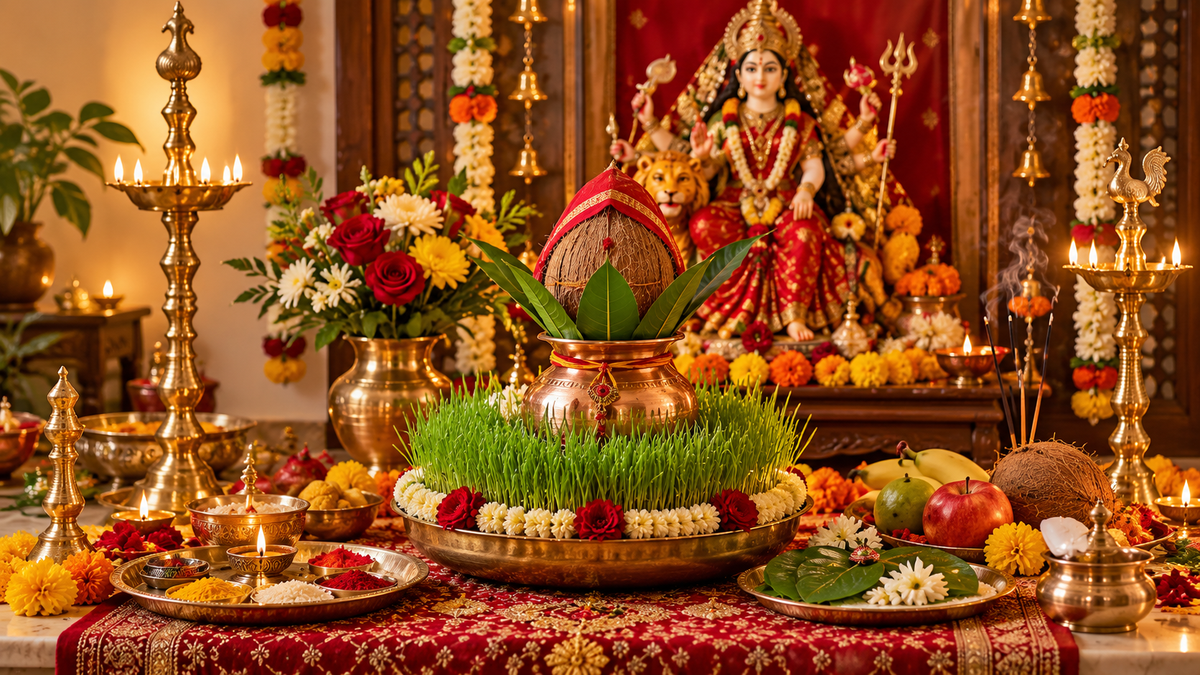
Place the idol or image of Maa Durga on a raised wooden chowki covered with a clean red or yellow cloth. A dedicated altar cloth keeps the space defined and sacred throughout the nine days.
Mind the Idol's Direction
Traditionally, the idol faces west or south, so that the devotee faces east or north while praying.
Keep It Simple and Uncluttered
Avoid crowding the space with too many images or old, faded items. A few meaningful objects hold more energy than many.
Light and the Akhand Jyoti
If you keep an akhand jyoti (an unbroken lamp) for nine days, place it in the southeast of the puja area, the direction of Agni (fire) in Vastu. Always keep it on a stable base, away from curtains, and never leave it unattended in a way that feels unsafe.
The Main Entrance
- Hang a fresh toran of mango leaves or marigold flowers at the entrance.
- Draw a small rangoli or place swastik and Shubh Labh symbols by the door.
- Keep footwear neatly away from the main door.
- Make sure the entrance is well lit in the evenings.
Colours and Fragrance
Use soft, auspicious colours such as red, yellow, orange and white around your home. Fragrance matters too: fresh flowers, camphor, guggal or sandalwood are all traditionally used to purify the air during Navratri.
What to Avoid During Navratri
- Avoid keeping broken idols, cracked mirrors or stopped clocks in the home.
- Keep the kitchen clean and sattvic during the nine days.
- Avoid clutter in the northeast, which Vastu considers sensitive.
- Keep the puja area away from the bathroom and avoid shared walls where possible.
After Navratri
When the festival ends, immerse or respectfully dispose of offerings, clean the puja space again, and keep the northeast corner light and uncluttered. This keeps the space ready for the next big celebration: Diwali.
Frequently Asked Questions
Which direction is best for Navratri kalash sthapana?
The northeast (Ishan kon) is considered the most auspicious direction. East is a good alternative.
Can I mop with salt water during Navratri?
Yes. Salt water mopping before and during Navratri is a traditional Vastu practice believed to refresh the energy of the home.
Where should the akhand jyoti be placed?
Vastu suggests the southeast of the puja space, which is associated with Agni. Always keep it safe and stable.
What colour cloth should be used under the Goddess?
Red or yellow cloth is traditionally used, as both colours are associated with auspiciousness and Shakti.
I live in a small apartment. How can I follow Vastu for Navratri?
Keep a small, clean puja shelf in the northeast or east, declutter that area, and keep it well lit. Intention matters more than size.